The Bard Conservatory
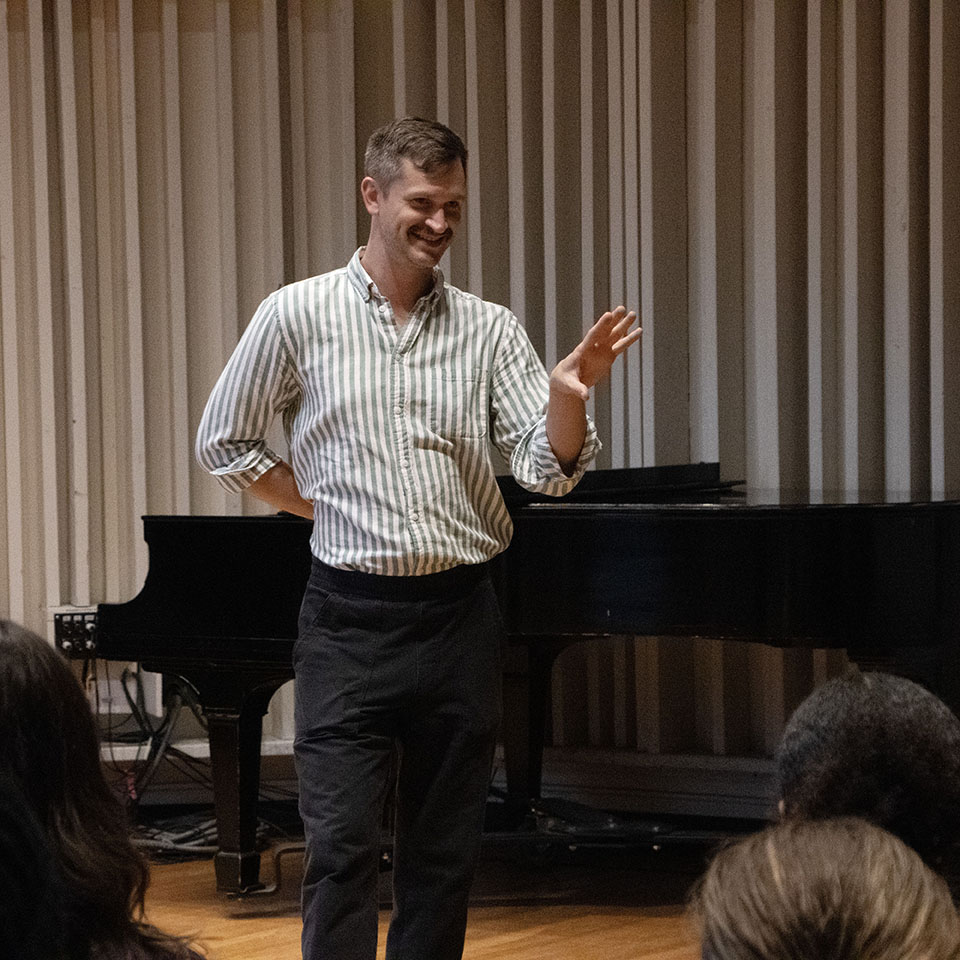
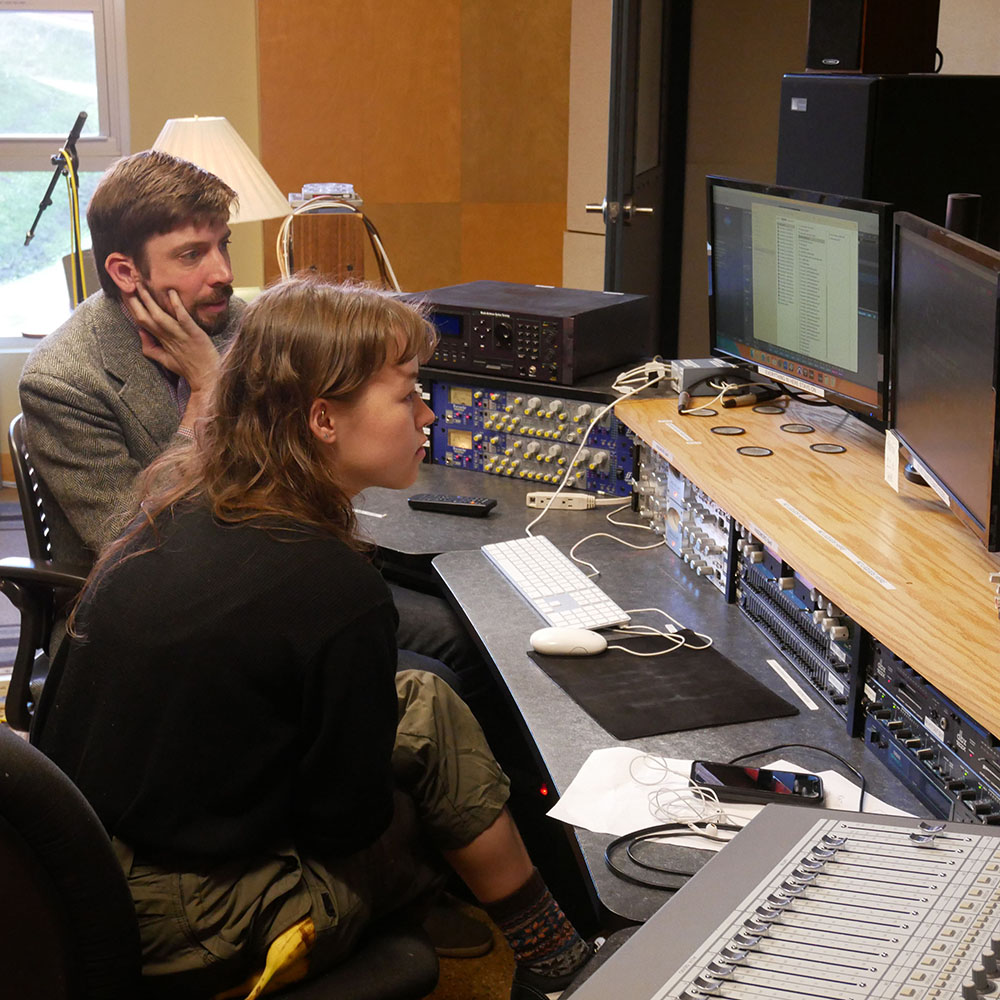
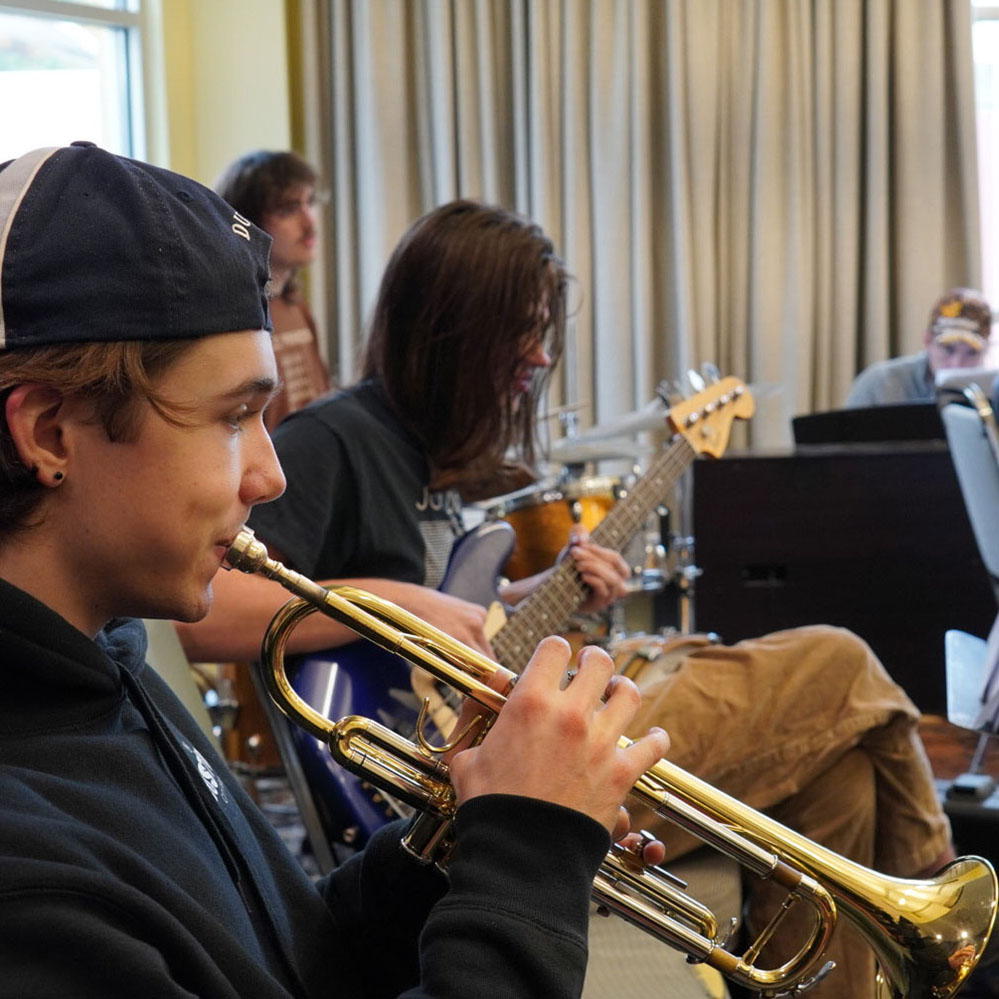
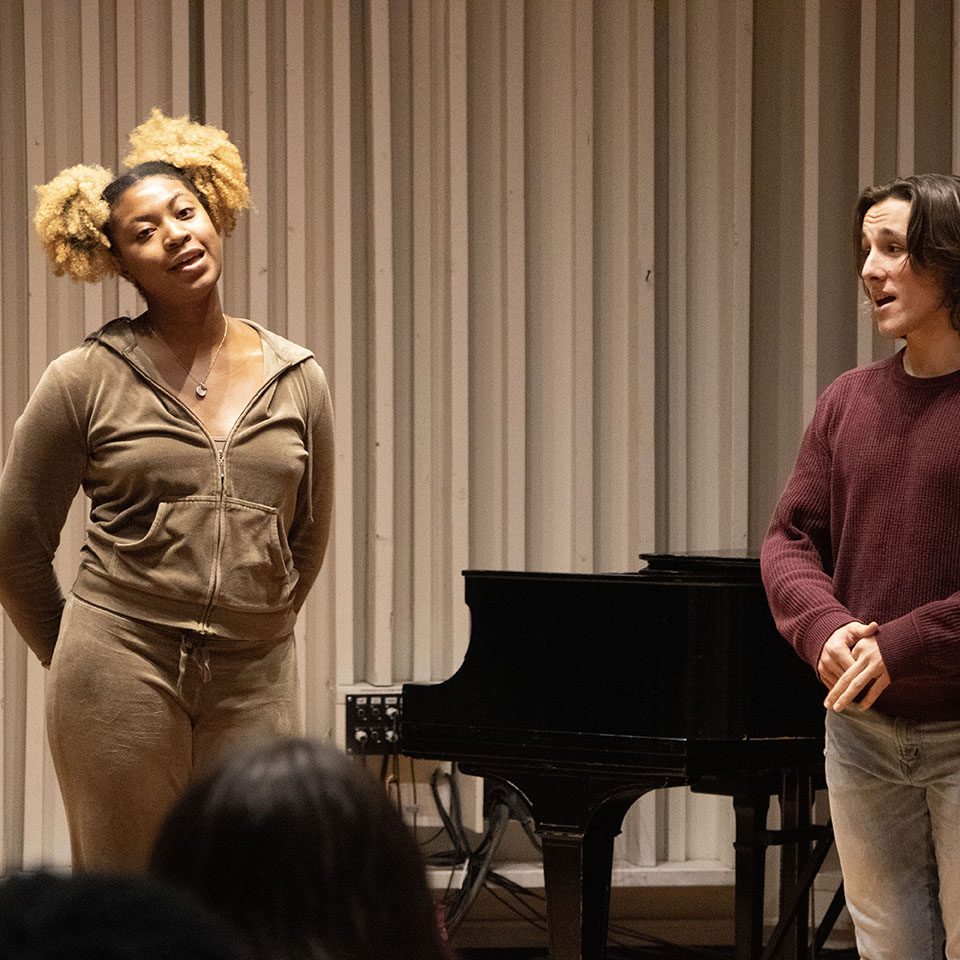
The Music Program is separate from the Bard College Conservatory of Music, which has a double-degree program and various graduate programs. The Conservatory's primary differences are as follows: focus on classical music performance and composition; secondary major required; five-year program; and audition required to apply. Despite the separation, many performance opportunities involve both Conservatory students and Music Program students.
Applying to the Program
Upcoming Events
-
9/08Tuesday6:30 pm – 8:30 pm EDT/GMT-4
Bitó Conservatory Building, Performance Space
An Evening of Jazz
Marilyn Crispell and Angelica Sanchez, piano duo
Tuesday, September 8, 2026Jazz at Bard proudly presents an evening with two of the most distinctive voices in creative music: Marilyn Crispell and Bard College's own Angelica Sanchez.
6:30 pm – 8:30 pm EDT/GMT-4
Bitó Conservatory Building, Performance Space
This performance brings that acclaimed partnership to the stage, offering audiences a rare opportunity to experience the artistry behind How to Turn the Moon live. Moving fluidly between composition and improvisation, Crispell and Sanchez create music of intimacy, intensity, and discovery, demonstrating the boundless expressive possibilities of the piano duo.
Join us after the concert for a wine and cheese reception.
Tickets for the evening performance and reception start at $60 per person. Proceeds benefit Jazz at Bard.
-
9/08Tuesday6:30 pm – 8:30 pm EDT/GMT-4
Bitó Conservatory Building, Performance Space
An Evening of Jazz
Marilyn Crispell and Angelica Sanchez: Piano Duo
Tuesday, September 8, 2026An NEA Jazz Master, 2025 and 2026 Mellon Foundation Jazz Legacy Fellow, Marilyn Crispell has forged a singular musical language shaped by deep lyricism, fearless improvisation, and a lifelong commitment to artistic exploration. Her work with Anthony Braxton, Reggie Workman, Joe Lovano, Wadada Leo Smith, and many others has established her as one of the most influential pianists and composers in contemporary creative music. For more than four decades, Crispell has remained a pioneering force in avant-garde jazz, creating music that is both adventurous and deeply expressive.
6:30 pm – 8:30 pm EDT/GMT-4
Bitó Conservatory Building, Performance Space
Joining her is Bard's own Angelica Sanchez, an acclaimed composer, pianist, and educator whose music seamlessly integrates intricate compositional structures with the spontaneity of improvisation. A leading voice in modern creative music, Sanchez has collaborated with artists including Wadada Leo Smith, Paul Motian, Nicole Mitchell, Joe Lovano, Tim Berne, and Billy Hart. Her recordings have received widespread critical acclaim, with Sparkle Beings named one of The New York Times' Top Ten Jazz Recordings of 2022 and Nighttime Creatures selected among DownBeat's Best Recordings of 2023.
A centerpiece of this collaboration is their celebrated duo recording, How to Turn the Moon (Pyroclastic Records). Recognized in NPR's Critics Poll as one of the Top 50 Recordings of 2020, the album showcases an extraordinary musical dialogue between Crispell and Sanchez. Through expansive improvisations, subtle textures, and profound listening, the recording reveals the deep artistic connection shared by these two remarkable pianists.
This performance brings that acclaimed partnership to the stage, offering audiences a rare opportunity to experience the artistry behind How to Turn the Moon live. Moving fluidly between composition and improvisation, Crispell and Sanchez create music of intimacy, intensity, and discovery, demonstrating the boundless expressive possibilities of the piano duo.
Tickets start at $60. To reserve your seat, visit bardian.bard.edu/register/eveningofjazz26.
Contact: Linda Baldwin
Phone: 845-758-7414
E-mail: [email protected]
-
10/10Saturday3:00 pm – 5:00 pm EDT/GMT-4
Fisher Center, Sosnoff Theater
Chasing Dreams: The Orchestra Now Celebrates America's 250th Anniversary
Saturday, October 10, 2026
3:00 pm – 5:00 pm EDT/GMT-4
Fisher Center, Sosnoff Theater
The theme of this year’s China Now Music Festival, “Chasing Dreams,” celebrates America’s 250th anniversary. The program features Zhou Long’s Men of Iron and the Golden Spike, a powerful symphonic oratorio honoring the thousands of Chinese laborers who came to America in the 1860s to build the Transcontinental Railroad that connected our coasts and transformed our nation. This epic work by the Pulitzer Prize winning composer includes a full orchestra, 120 choristers, and six soloists. Also featured is the U.S. premiere of Li Shaosheng’s five-movement symphonic suite Chasing the Sky, honoring humanity’s pursuit of space exploration. The festival is presented by the US-China Music Institute of the Bard College Conservatory of Music in collaboration with the Central Conservatory of Music, China.
Learn more at https://www.barduschinamusic.org/chasing-dreams
Sponsored by: Bard College Conservatory of Music; Chinese Studies Program; Fisher Center; Music Program
Contact: Michelle Li
Phone: 732-535-0768
E-mail: [email protected]
-
12/10Thursday7:00 pm – 8:00 pm EST/GMT-5
Blum N211, the Jazz room
NEWSROOM
Bard College Presents an Evening of Jazz with Marilyn Crispell and Angelica Sanchez on September 8
A centerpiece of this collaboration is their celebrated duo recording, How to Turn the Moon (Pyroclastic Records).
Bard College Presents an Evening of Jazz with Marilyn Crispell and Angelica Sanchez on September 8
The performance will be held on Tuesday, September 8, 2026, at 6:30 pm in the László Z. Bitó ’60 Conservatory building on Bard’s Annandale campus. Tickets start at $60. The concert will be followed with a wine and cheese reception, and all proceeds will benefit Jazz at Bard. To purchase tickets, please visit here.
Crispell, an NEA Jazz Master and 2025 and 2026 Mellon Foundation Jazz Legacy Fellow, has forged a singular musical language shaped by deep lyricism, fearless improvisation, and a lifelong commitment to artistic exploration. Her work with Anthony Braxton, Reggie Workman, Joe Lovano, Wadada Leo Smith, and many others has established her as one of the most influential pianists and composers in contemporary creative music. For more than four decades, Crispell has remained a pioneering force in avant-garde jazz, creating music that is both adventurous and deeply expressive.
Sanchez is an acclaimed composer, pianist, and educator whose music seamlessly integrates intricate compositional structures with the spontaneity of improvisation. A leading voice in modern creative music, Sanchez has collaborated with artists including Wadada Leo Smith, Paul Motian, Nicole Mitchell, Joe Lovano, Tim Berne, and Billy Hart. Her recordings have received widespread critical acclaim, with Sparkle Beings named one of The New York Times' Top Ten Jazz Recordings of 2022 and Nighttime Creatures selected among DownBeat's Best Recordings of 2023.
A centerpiece of this collaboration is their celebrated duo recording, How to Turn the Moon (Pyroclastic Records). Recognized in NPR's Critics Poll as one of the Top 50 Recordings of 2020, the album showcases an extraordinary musical dialogue between Crispell and Sanchez. Through expansive improvisations, subtle textures, and profound listening, the recording reveals the deep artistic connection shared by these two remarkable pianists. This performance brings that acclaimed partnership to the stage, offering audiences a rare opportunity to experience the artistry behind How to Turn the Moon live. Moving fluidly between composition and improvisation, Crispell and Sanchez create music of intimacy, intensity, and discovery, demonstrating the boundless expressive possibilities of the piano duo.
Post Date: 08-13-2026
Bard Faculty Member Gwen Laster Awarded a MacDowell Fellowship
While in residence, Laster will complete work on her project, “Is My Black Still Beautiful: Reflections on a Childhood in Detroit.”
Bard Faculty Member Gwen Laster Awarded a MacDowell Fellowship
Laster’s project explores the global complexities of Colorism, a discriminatory practice within one’s own ethnic group based on a person’s complexion and skin tone, through the lens of a Black girl reared during the post–civil rights movement in Detroit. The music spans various genres from contemporary classical to Motown, blues, soul, R&B, and jazz—both free and traditional. “Is My Black Still Beautiful” will premiere in New York City on July 23 at Mabou Mines,and on September 26–27 at the Philipstown Depot Theater.
The Music Program, one of the largest programs on Bard’s campus, provides a wide range of musical concentrations, from classical composition and performance to jazz, electronic music, musicology, ethnomusicology, and music theory.
Post Date: 06-26-2026
Bard Musician Franz Nicolay Testifies in Congress
The case concerned the merger of Live Nation and Ticketmaster which has resulted in a monopoly on event ticket sales in the United States.
Bard Musician Franz Nicolay Testifies in Congress
“We, as artists, simply don’t have the range of city-to-city, venue-to-venue choices that would constitute a healthy ecosystem,” Nicolay continued. “It’s a problem of affordability, in an economic climate which, through drastically increasing gas prices, airfare, postage and international shipping fees for merchandise, and hardening borders, is making the touring on which our livings depend increasingly unaffordable for musicians. And that increased overhead… has a corresponding effect on affordability and access for fans.”
The Music Program, one of the largest programs on Bard’s campus, provides a wide range of musical concentrations, from classical composition and performance to jazz, electronic music, musicology, ethnomusicology, and music theory.
Read more in Chronogram
Further Reading in Rural Intelligence
Post Date: 06-02-2026